
Key Takeaways
- Ellipticals engage both upper and lower body simultaneously, making them one of the most calorie-efficient machines in any gym or home setup.
- The low-impact, gliding motion dramatically reduces joint stress compared to running – without sacrificing cardiovascular intensity.
- Adjustable incline and resistance settings let users target specific muscle groups on demand, turning a single machine into a full lower-body sculpting tool.
- Ergonomic details address common pain points that send many people away from the elliptical too soon.
- Weight capacity matters more than most buyers realize before purchasing a home elliptical; read on to see what the numbers actually mean.
Walk into any gym, and the elliptical section is usually crowded for a reason. These machines consistently deliver serious cardiovascular results, keep users coming back because they don’t beat up the body, and actively work more muscle groups than most other cardio options – particularly when the moving handlebars are engaged.
The design details behind those outcomes are worth understanding, especially for anyone building a home gym and trying to choose wisely.
Ellipticals Are Recommended For Heavier Users – Here’s Why
Most cardio machines start showing their limits under heavier users. Impact forces multiply, joints complain louder, and the equipment itself can feel unstable. Ellipticals sidestep a lot of this because the feet never leave the pedals. There’s no landing phase, no repeated collision with a surface – just a continuous, guided glide that spreads force evenly across the stride cycle.
That mechanical design makes ellipticals a genuinely smart starting point for anyone carrying extra weight who wants to exercise consistently without compounding joint problems. The smooth motion reduces the risk of overuse injuries that derail so many new fitness routines early on. Pair that with a sturdy weight capacity – quality machines support up to 400 lbs – and the elliptical is one of the most inclusive pieces of cardio equipment available.
One Machine, Every Major Muscle Group
Upper and Lower Body, Simultaneously
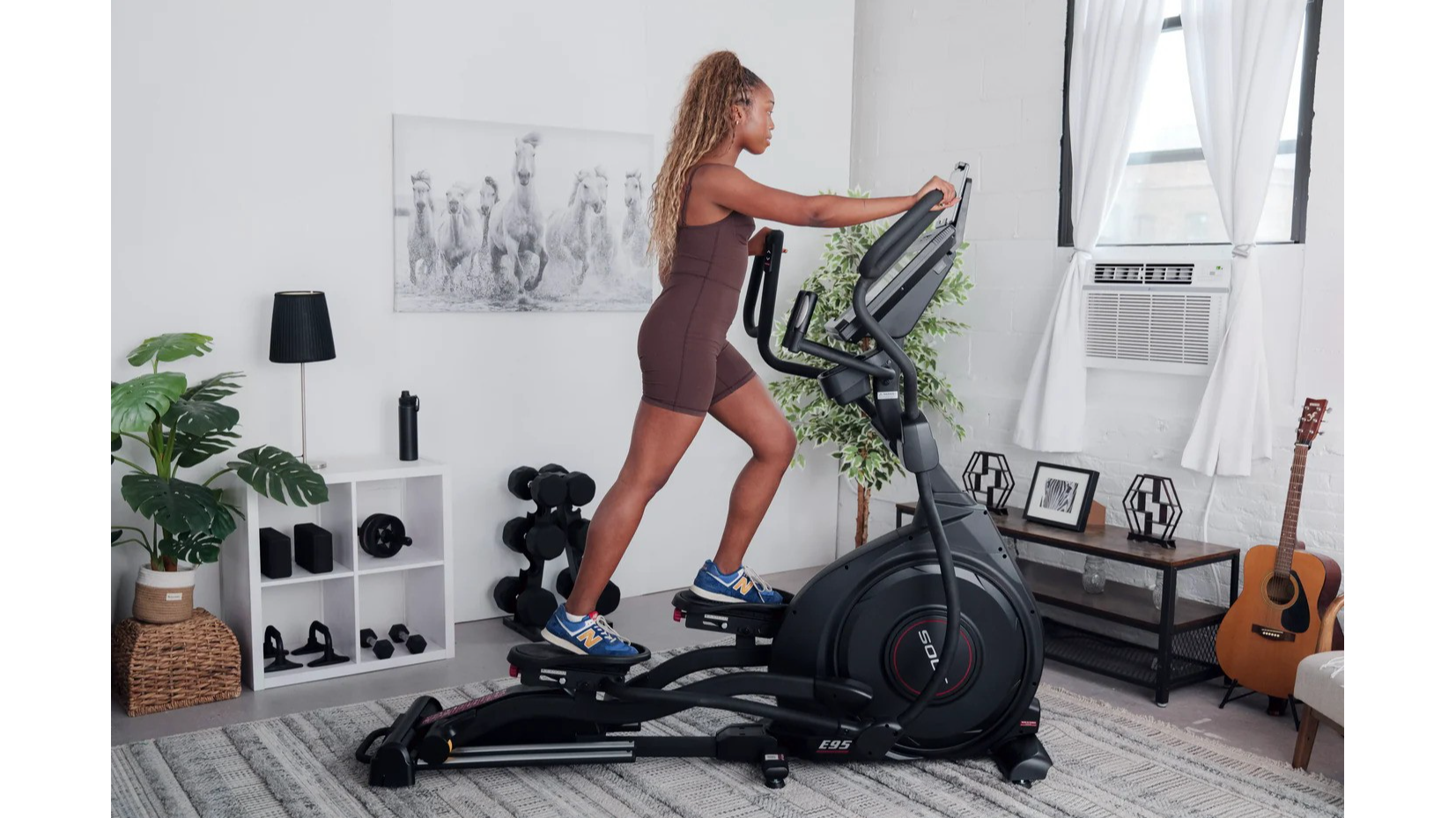
Most cardio equipment is a lower-body affair. Treadmills, stationary bikes, stair climbers – the arms are largely along for the ride. Ellipticals break from this pattern by adding moving handlebars that, when actively used, engage the chest, shoulders, back, and arms while the legs drive the stride. The result is a full-body workout built into a single fluid motion.
Why That Efficiency Matters for Calorie Burn
Engaging more muscle groups at once means the body has to work harder overall, and that translates directly to calorie expenditure. Research suggests a 150-pound person can burn approximately 300-400 calories in just 30 minutes on an elliptical, depending on intensity. Because both halves of the body are contributing, total output climbs higher than exercises that isolate only the legs or only the arms.
For anyone chasing a calorie deficit – the core requirement for weight loss – that efficiency is a meaningful advantage. Getting more burn from the same time investment matters, especially for people with packed schedules.
Low Impact Doesn’t Mean Low Results
How Ellipticals Reduce Joint Stress Compared to Running
Running generates impact forces roughly two to three times a person’s body weight with every footstrike. Over a 30-minute session, those collisions add up fast. The elliptical’s oval motion eliminates that landing spike entirely. The feet stay in contact with the pedals throughout, and the machine guides the stride path – meaning the knees, hips, and ankles absorb a fraction of the stress they’d face on a treadmill or pavement.
Sports medicine resources consistently point to this smooth, gliding motion as a key reason ellipticals help prevent the overuse injuries that sideline runners – things like shin splints, stress fractures, and IT band syndrome.
Who Benefits Most From This Design
The low-impact nature makes ellipticals particularly valuable for:
- Beginners returning to exercise after a long break, where joints aren’t yet conditioned for repeated impact
- Individuals with chronic knee or hip pain who still want serious cardiovascular training
- Heavier users for whom high-impact exercise carries elevated injury risk
- Active recovery days for athletes who need to keep moving without overloading the body
Exercise science also notes an interesting phenomenon: perceived exertion on an elliptical tends to run lower than actual physiological effort. In plain terms, the workout feels easier than it is – which often means people sustain it longer and stay more consistent over time.
Incline and Resistance: The Hidden Weight Loss Levers
Targeting Glutes, Hamstrings, and Calves on Demand
Flat-plane elliptical motion is effective enough on its own. Add incline into the equation, and the machine transforms. Raising the ramp angle shifts the workload toward the glutes and hamstrings – two of the body’s largest muscle groups. Higher incline also pulls the calves into the movement more aggressively. More muscle recruited means more calories burned per stride.
Resistance works in tandem with incline. Stacking both forces the cardiovascular system to work harder while simultaneously building muscular endurance in the lower body – a combination that supports sustained fat loss well beyond the workout itself.
Ergonomic Design Details That Actually Make a Difference
The 2-Degree Inward Pedal Slope
Most ellipticals position their pedals flat, or close to it. That sounds neutral, but it actually places the ankle and knee joints in a slightly awkward alignment over the course of a long session – one reason some users experience discomfort or quit the machine earlier than they’d like.
The solution? A 2-degree inward slope. The change is subtle, but the effect is noticeable: the angle brings the lower leg into a more natural position, reducing the lateral stress on the ankle and knee that accumulates with repetitive motion. For longer workouts or heavier users, that reduction in cumulative joint stress matters considerably.
Adjustable Pedal Angle: What these Systems Actually Offer
Beyond a fixed inward slope, some select models go a step further with a worm-drive pedal angle adjustment – a dial mechanism that lets users fine-tune the exact angle of each pedal across 10 levels. This feature is not found on most ellipticals at any price point.
The practical benefit: it customizes the machine’s fit to an individual user’s natural gait and foot position. This system also reduces two common elliptical complaints – numb toes and Achilles tendon soreness – that tend to develop when pedal angle doesn’t match the way a user naturally walks or strides. Getting the fit right keeps workouts comfortable, which keeps users on the machine consistently.
What to Know About Weight Limits Before You Buy
Weight limits on ellipticals aren’t arbitrary numbers – they reflect the structural integrity of the frame, the load tolerance of the pedals and flywheel, and the overall stability of the machine under dynamic movement. Exceeding the stated limit doesn’t just risk equipment damage; it introduces real safety concerns.
A few things worth knowing before purchasing:
- Always choose a machine rated above current body weight – a buffer of 50 lbs. or more provides a margin of safety and accounts for the dynamic forces generated during actual use, which exceed static weight.
- Frame material matters. Steel frames generally support higher capacities than aluminum or composite alternatives.
- Pedal size and base width affect both comfort and stability, especially near the upper end of the weight range.
Crucially, a combination of structural confidence and long-term coverage results in credible options for users who need a machine genuinely built to handle sustained, heavy use.
For Sustainable Weight Loss, the Elliptical Earns Its Place at the Top
Weight loss is a long game. The equipment that wins isn’t always the one that feels hardest – it’s the one that gets used consistently, week after week, without injury or burnout. Ellipticals check that box more reliably than almost any other cardio machine.
The full-body engagement drives serious calorie burn. The low-impact motion protects the joints that high-impact training steadily erodes. Adjustable incline and resistance ensure the machine never stops being challenging as fitness improves. Smart ergonomic engineering removes the comfort barriers that typically push people off the machine before the habit has a chance to form.
That’s not a single advantage. That’s a system of advantages working together, which is exactly what effective, sustainable weight loss training actually requires.
SOLE Fitness
56 Exchange Pl.
Salt Lake City
UT
84111
United States


